
Loading...

IBD โ€“ Ulcerative Colitis & Crohns

Ulcerative Colitis & Crohnโ€™s Disease

What is IBD?

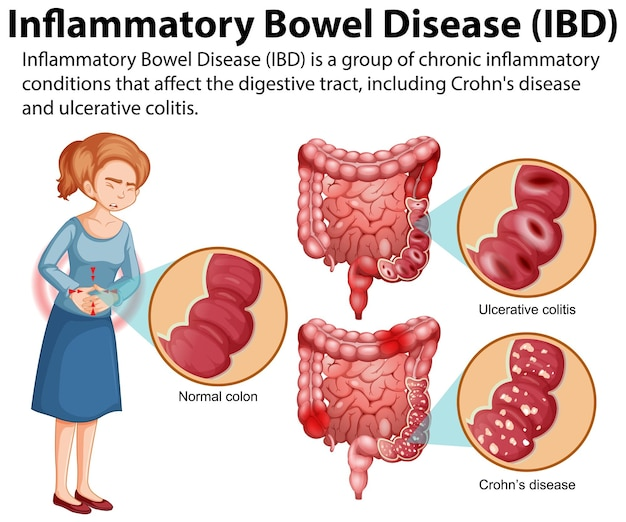
IBD stands for Inflammatory Bowel Disease, which includes:

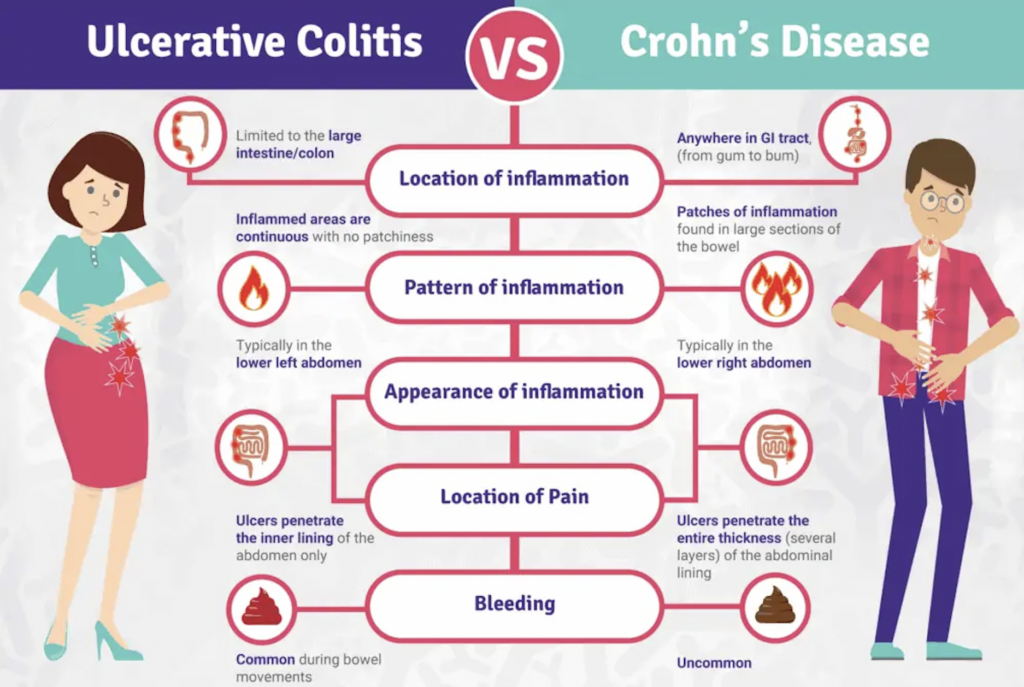
  • ๐Ÿ”น Ulcerative Colitis (UC) โ€“ affects the large intestine (colon).
  • ๐Ÿ”น Crohnโ€™s Disease โ€“ can affect any part of the digestive tract, from mouth to anus.

These are chronic conditions caused by an overactive immune system, leading to long-term inflammation.

Common symptoms:

  • ๐Ÿ’ฉ Loose stools or diarrhea
  • ๐Ÿฉธ Blood in stools
  • ๐Ÿค• Abdominal pain
  • โš–๏ธ Weight loss, fatigue

What Happens in IBD?

Crohnโ€™s Disease
Can affect any part of the digestive tract โ€“ from mouth to anus, most commonly the small intestine and colon.

  • ๐ŸŒ€ Narrowing (strictures) due to swelling like a traffic jam in your gut.
  • ๐Ÿ•ณ๏ธ Fistulas โ€“ abnormal tunnels between the intestine and other organs or skin.
  • โš ๏ธ Patchy involvement โ€“ healthy areas mixed with inflamed ones.

Extraintestinal symptoms (outside the gut):

  • Joint pain
  • ๐ŸŒฟ Skin rashes
  • ๏ธ Eye irritation
  • Liver problems

๐Ÿ“‹ In cases of narrowing, your doctor may recommend a low residue diet โ€“ soft, easy-to-digest foods.

Ulcerative Colitis (UC)
Affects only the large intestine (colon) and rectum. Inflammation starts from the rectum and spreads upward.

  • ๐Ÿ”ฅ Continuous inflammation โ€“ unlike Crohnโ€™s, the inflammation is not patchy.
  • ๐Ÿฉธ Bloody diarrhea a common symptom due to ulcers in the colon lining.
  • ๐Ÿ”„ Urgency and frequency โ€“ sudden, repeated urges to pass stool.
  • ๐Ÿ’ง Mucus in stools due to damage to the colon lining.

Extraintestinal symptoms may also occur, similar to Crohnโ€™s.

Treatment Plan

IBD needs long-term treatment and regular checkups.

Medications help to:

  • ๐Ÿงฏ Reduce inflammation
  • ๐Ÿ›ก๏ธ Maintain remission (control phase)
  • ๐Ÿ”„ Prevent complications

Types of medicines:

  • ๐Ÿ’Š 5-ASA
  • ๐Ÿ’Š Steroids
  • ๐Ÿ’Š Immunosuppressants
  • ๐Ÿ’Š Biologics

If a treatment stops working, it may be switched this is common and manageable.

Sometimes surgery may be considered in specific clinical scenarios

What You Should Know

  • โœ”๏ธ Take medications regularly skipping can cause a flare.
  • โœ”๏ธ Doctor may adjust doses based on your labs and symptoms.
  • ๐Ÿงผ During immunosuppression:
    • โœ”๏ธ Wash hands often
    • โœ”๏ธ Avoid uncooked or street food
    • โœ”๏ธ Avoid crowded places during illness seasons
    • โœ”๏ธ Get your vaccinations (your doctor will advise)
  • Diet Tips:
    • โœ”๏ธ During flares or strictures โ†’ low residue diet (no raw veggies, nuts, or seeds)
    • โœ”๏ธ Eat small meals, drink plenty of water
  • This condition is manageable with teamwork your commitment + our care.
Call Us Anytime

+91 8790852233

+91 7702677797

sanghamitragastroenterology@gmail.com

KGH: Pentakota Complex, Maharanipeta

MVP: MIG-55, Sector 5, MVP Colony

WhatsApp